MATERIAL SAFETY DATA SHEET
Section 1. Product General Information And Company Identification
Product Name |
Niobium (Columbium), Sheet, rod, wire, tubing & other mill shapes |
UN Number |
Not applicable |
CAS # |
7440-03-1 |
WHMIS Classification |
This is not a controlled product |
Chemical Formula |
Nb |
Chemical Family |
Refractory Metal |
Product Use |
Thin films,Glass,optical intruments etc. |
Available Packaging |
Packed in synthetic case |
Responsible Party |
Solution Resources Corporation (SRC)
Rm706,East Star Building,1508 Jiangpu Rd. Shanghai China
Post Code:200092
For further information,please contact SRC MSDS coordinator
at +86 13817363982
Working time:9:00am-17:00pm , Monday-Friday |
Section 2. Hazardous Ingredients
MATERIAL |
OSHA |
ACGIH |
Niobium (Columbium) |
Not established |
Not established |
|
Concentration: (%) |
Greater than 99% |
Section 3 Physical Data
Physical Form: |
Solid |
Appearance & Odor: |
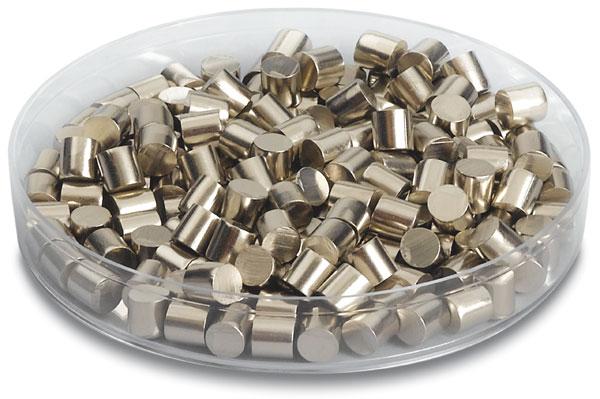
Silver gray metal, odorless |
Ph: |
Approx. 7 in aqueous suspension |
Boiling Point: |
8900¡ã f (4927¡ã c) |
Melting/Freezing Point: |
4474¡ã f (2468¡ã c) |
Vapor Pressure: |
N/a |
Solubility In Water: |
Insoluble |
Specific Gravity: |
8.57 |
% Volatile By Weight: |
N/A |
Section 4 Fire And Explosion Hazards Data
Flash Point: |
Not applicable |
Auto-Ignition Temperature: |
Not established |
Extinguishing Media: |
Dry powder type agents specifically designed for metal powder fires. |
Special Fire Fighting
Procedures: |
Do not apply water to burning material. Full emergency equipment with self-contained breathing apparatus must be worn by firefighters. During a fire, irritating and toxic gases and aerosols may be generated by thermal decomposition and combustion. |
Unusual Fire/Explosion
Hazards: |
This product consists of pieces of metal. Dust and fumes generated from this product (through grinding, cutting, sawing, welding, sanding, etc.) May be a fire and explosion hazard when exposed to high temperatures or ignition sources. Particle size and dispersion in air determine reactivity. |
Acgih:
Niosh:
Osha:
Twa: |
American conference of governmental industrial hygienists
national institute for occupational safety and health
occupational safety and health administration
time weighted average |
Section 5. Health Hazard Information
|
Routes Of Exposure: |
Inhalation, Skin Contact, Eye Contact. |
Human Effects & Symptoms Of Overexposure: |
|
Acute Effects Of Exposure: |
Material is a non-reactive solid. Mechanical irritation (i.e. abrasion) to the eyes, skin or respiratory tract may occur due to exposure to dusts formed in the mechanical treatment (i.e. cutting, sawing) of this material. |
|
Chronic Effects Of Exposure: |
None known. |
|
Carcinogenicity: |
This product is not listed by ntp, iarc or regulated as a carcinogen by osha. |
|
Medical Conditions: |
None known. |
|
Exposure Limits: |
Although no exposure limit, in general, has been established for this product, the acgih-tlv for particulates not otherwise classified (pnoc) of 10 mg/m3 twa is recommended. |
|
Section 6. Reactivity Data
Stability: |
Stable, however, powder or dust in fine size may ignite during intensive mechanical treatment. |
Hazardous Polymerization: |
Will not occur. |
Incompatibilities: |
Reacts violently with fluorine, chlorine and bromine trifluoride. Contact with strong oxidizers may cause fire/explosions. |
Instability Conditions: |
Keep away from sparks or ignition sources. |
Decomposition Temperature: |
Not established. |
Decomposition Products: |
Not known. |
Section 7. Spill Or Leak Procedures
Spill Or Leak Procedures: |
Utilize recommended protective clothing and equipment. Spills should be swept up and placed in containers. Avoid generation of dust. If dust is generated, use appropriate respiratory protection. Spill area can be washed with water. Collect wash water for approved disposal. Keep from entering water or ground water. |
Waste Disposal Method: |
May be reclaimed or sold for scrap. Disposal must be in compliance with federal, state and local environmental control regulations. |
Section 8. Special Protection Information
Eye Protection Requirements: |
Safety glasses with side shields or goggles are recommended. |
Skin Protection Requirements: |
Chemically resistant gloves and clothing are recommended to minimize skin contact. Employees should wash their hands and face before eating, drinking or using tobacco products. |
Respirator Requirements: |
Work ambient concentrations should be monitored and if the recommended exposure limit is exceeded, a niosh/msha approved dust respirator should be worn. |
Ventilation Requirements: |
Use local exhaust ventilation adequate to keep exposure levels below the tlv for nuisance dust. |
Additional Protective Measures: |
Emergency showers and eye wash stations should be available. Educate and train employees in the safe use and handling of this product. |
First Aid For Eyes: |
Flush eyes with plenty of clean water. Contact a physician if irritation is present and persists. |
First Aid For Skin: |
Remove contaminated clothing. Wash affected areas with soap and water. Contact a physician if irritation is present and persists.. |
First Aid For Inhalation: |
Remove to fresh air. |
First Aid For Ingestion: |
Dilute with large quantities of water and induce vomiting. Never give anything by mouth to an unconscious person. Contact a physician. |
Section 9. Special Precautions
Temperature (Min/Max): |
Not established. |
Shelf Life: |
Not established. |
Special Sensitivity: |
None known. |
Handling/Storage Precautions: |
Solids require handling and storage appropriate for weight, size and shape of the material involved. |
Issued by: Jack Liu
Issue Date: November 1999 |