HOME PRODUCT QUALITY ASSURANCE COA&MSDS ABOUT US CONTACT US CAREER NEWS


Welcome to Solution Resources Corporation>>>>Tungsten


MATERIAL SAFETY DATA SHEET

Section 1.  Product General Information And Company Identification

Product Name

Tungsten, Tungsten Powder or Metal and Sheet

UN Number

Not applicable

CAS #

7440-33-7

WHMIS Classification

This is not a controlled product

Chemical Formula

W

Chemical Family

Refractory Metal

Product Use

Thin films,Glass,optical intruments etc.

Available Packaging

Packed in synthetic case

Responsible Party

Solution Resources Corporation (SRC)
Rm706,East Star Building,1508 Jiangpu Rd. Shanghai China
Post Code:200092
For further information,please contact SRC MSDS coordinator
at +86 13817363982
Working time:9:00am-17:00pm , Monday-Friday


Section 2. Hazardous Ingredients

Material

%

Osha Twa

Acgih Twa

Acgih Stel

Tungsten Oxide

>99

5(Insoluble)

5(Insoluble)

10(Insoluble)


1(Soluble)

1(Soluble)

3(Soluble)

(All Exposure Limits In Mg/M3, Values For Airborne Tungsten Powder And Dust)


Section 3    Physical Data

Appearance And Odor :

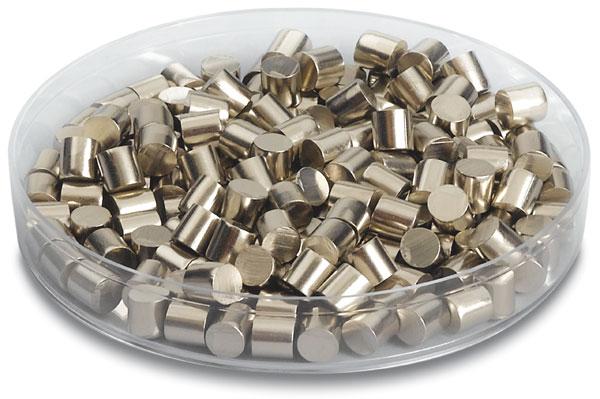
Steel Gray To Tin White Metal Or Powder

Boiling Point :

5900¡ã C

Specific Gravity (H20=1) :

19.3

Vapor Pressure (Mm Hg) :

Na @ 25¡ã C

Evaporation Rate :

Na

Percent Volatile By Volume :

0

Vapor Density (Air=1) :

Na

Solubility In Water :

Insoluble

How Best Monitored :

Air Sample

Melting Point:

3410¡ãC

Odor:

None


Section 4  Fire And Explosion Hazards Data

Extinguishing Media :

Use Class D Fire Extinguishing Agents (Dry Powder).

Special Procedures :

For A Powder Fire Confined To A Small Area -Use A Respirator Approved For Toxic Dusts And Mists. For A Large Fire - Use Self Contained Breathing Apparatus.

Unusual Hazard :

Dusts May Present A Fire Or Explosion Hazard Under Rare Favoring Conditions Of Particle Size, Dispersion, And Strong Ignition Source. However, This Is Not Expected To Be A Problem Under Normal Handling Conditions.

Acgih:
Niosh:
Osha:
Twa:

American Conference Of Governmental Industrial Hygienists
National Institute For Occupational Safety And Health
Occupational Safety And Health Administration
Time Weighted Average

  
Section 5.   Health Hazard Information

Primary Routes Of Entry :

Inhalation, Ingestion, Skin Or Eye Contact (For Dusts, Mists, Powder And Fumes).

Effects Of
Overexposure :

Industrially Tungsten Does Not Constitute An Important Health Hazard. Exposure Is Related Chiefly To The Dust Arising Out Of The Crushing And Milling Operations. Chronic Inhalation Of The Dust May Cause Lung Damage In Humans.

Carcinogenic Assessment :

Not Listed.

Eye Contact :

If Irritation Occurs, Flush With Large Amounts Of Water For At Least 15 Minutes, And Call A Physician.

Skin Contact :

Wash With Soap And Water. If Irritation Or Rash Occurs, Isolate From Exposure. If Rash Persists, Seek Medical Attention.

Inhalation :

If Large Amounts Of Dust Are Inhaled, Move The Exposed Person To Fresh Air. If Necessary, Perform Artificial Respiration And Seek Medical Attention.

Ingestion :

If Ingested, Get Medical Attention. Give Large Quantities Of Water And Induce Vomiting. Do Not Make An Unconscious Person Vomit.

 Section 6.    Reactivity Data


Incompatibilities:

The Powdered Metal May Ignite On Contact With Air Or Oxidants (E.G. F2; Cif3; Nox; If5; Pb02; No2; And N2o)

Stability:

Stable Under Normal Operating Conditions.

Conditions To Avoid:

Na

Hazardous Polymerization:

Will Not Occur

Hazardous Decomposition Products:

None

Toxicological Information:

Tungsten Itself Does Not Constitute An Important Health Hazard. Exposure Is Related Chielfy To Any Dust Created. The Feeding Of 2, 5 And 10% Of Diet As Tungsten Metal Over A Period Of 70 Days Has Shown No Marked Effect Upon The Growth Of Rats, As Measured In Terms Of Gain In Weight. Heavy Exposure To The Dust Or The Ingestion Of Large Amounts Of The Soluble Compounds Produces Changes In Body Weight, Behavior, Blood Cells, Choline Esterase Activity And Sperm In Experimental Animals.

Ecological Information:

None Available At This Time.

Disposal Considerations:

This Material Must Be Disposed Of In Accordance With Any And All Applicable Local, State And Federal Regulations. Material Intended For Disposal May Be Sold As Scrap For Reclaim.

Transport Information:

Certain Particle Size Powders May Be Classed As Class 4, Divison 4.1, Flammable Solid.

Regulatory Information:

Not Available At This Time.

Handling And Storage :

Tungsten Is, In General, A Safe Material To Handle And Use Under Almost All Commonly Encountered Environments. Special Precautions Should Be Observed In Order To Minimize The Dust Created. The Generation Of Dust Or Mists May Present A Health Hazard If The Exposure Limited, As Described Above, Are Exceeded. Maintain Good Housekeeping Procedures To Prevent The Accumulation Of Dust And The Generation Of Airborne Dust Particles. Avoid Dust Inhalation And Direct Skin Contact With The Dust. Wash Hands Thoroughly Before Eating Or Smoking. Wash Exposed Skin At The End Of The Work Shift.


Section 7.   Spill Or Leak Procedures


Steps To Be Taken In Case Material Is Released Or Spilled:

If Material Is Released Or Spilled, Ventilate The Area Of The Spill. Clean Up Using Methods Which Avoid The Generation Of Dusts. Such Methods Include Wet Mopping Or Vacuuming (Assuring That The Vacuum Is Equipped With The Proper Filler To Prevent Airborne Dust Levels Which Exceed The Pel Or Tlv). If Airborne Dust Is Generated, Use The Appropriate Niosh Approved Respiratory Protection.

  
Section 8.    Special Protection Information


Respiratory Protection:

Use An Appropriate Niosh Approved Respirator If Airborne Dust Concentrations Exceed The Appropriate Pel Or Tlv. All Requirements Set Forth In 29cfr1910.134 Must Be Met.

Ventilation:

Use Local Exhaust Ventilation Which Is Adequate To Limit Personal Exposure To Airborne Dust To Levels Which Do Not Exceed The Appropriate Pel Or Tlv. If Such Equipment Is Not Available, Use Respiratory Protection As Specified Above.

Protective Gloves:

Protective Gloves Or Barrier Creams Are Recommended When Contact With Dust Or Mist Is Likely. Wash Thoroughly Prior To Applying Barrier Creams Or Using Protective Gloves.

Eye Protection:

Safety Glasses With Side Shields Or Goggles Are Recommended.


Section 9.    Special Precautions


Other Equipment:

None Under Normal Operating And Handling Conditions.


Issued by:   Jack Liu
Issue Date:  November 1999


»¦ICP±¸05059626ºÅ Copyright@2008 Solution Resources Corporation.All rights reserved